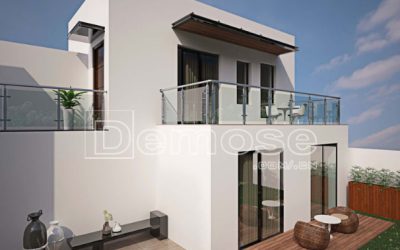
Of course! That’s an excellent question because the answer isn’t a single number. The number of railing types depends entirely on how you classify them. They can be categorized by material, location/application, style, and building codes.
Here is a comprehensive breakdown of the most common ways to classify railings.

1. By Material (The Most Common Classification)
This is how most people first think about railings. The material defines the look, cost, durability, and maintenance.
- Metal Railings: Very popular due to their strength and versatility.
- Wrought Iron: Classic, ornate, and very strong. Often used for traditional or historic styles. Requires maintenance to prevent rust.
- Aluminum: Lightweight, rust-proof, and low maintenance. Often used for porches and pool decks. Can be designed to look like wrought iron.
- Stainless Steel: Modern, sleek, and highly corrosion-resistant. Common in contemporary homes, commercial buildings, and marine environments.
- Carbon Steel: Extremely strong, used in industrial settings. Usually powder-coated for durability.
- Wood Railings: Offer a warm, traditional, and natural look.
- Types: Pressure-treated pine, cedar, redwood, ipe, and mahogany are common.
- Common Uses: Decks, porches, indoor staircases.
- Consideration: Requires regular staining or sealing to protect against the elements.
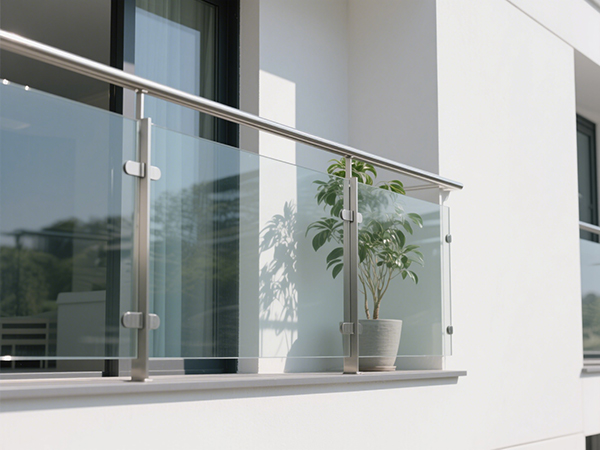
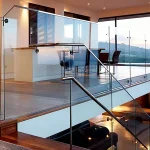
- Glass Railings (Frameless or Framed): Provide an unobstructed view and a modern, clean aesthetic.
- Frameless: Uses minimal hardware (clamps) for a “floating” look.
- Framed: Glass panels are set into a metal or wood framework.
- Common Uses: Balconies, decks with a view, commercial staircases, pool fencing.
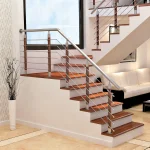
- Cable Railings: Use horizontal stainless steel cables instead of balusters for a modern, minimalist look that maximizes visibility.
- Common Uses: Decks, staircases, and anywhere an open view is desired.
- Vinyl/PVC Railings: Made from synthetic materials.
- Pros: Extremely low maintenance, won’t rot, rust, or need painting.
- Cons: Can have a less “premium” feel than wood or metal.
- Common Uses: Low-maintenance decks and porches.
- Composite Railings: Made from a blend of wood fibers and plastic.
- Pros: Has the look of wood but with much higher durability and lower maintenance. Resistant to rot and insects.
- Common Uses: Decks, particularly as a wood alternative.

2. By Location and Application
The purpose of the railing greatly influences its design and the building codes it must follow.
- Stair Railing: Installed on a staircase. Has specific code requirements for height and grip-ability.
- Deck Railing: Surrounds the edge of a raised deck. Codes specify minimum height (usually 36″ for residential, 42″ for commercial).
- Guardrail: A broader term for any railing system designed to prevent a fall from an elevated surface (like a deck, balcony, or landing).
- Balcony Railing: Similar to a deck railing but for a balcony attached to a building.
- Porch Railing: Often more decorative, surrounding a porch at ground level or slightly elevated.
- Industrial Railing: Designed for safety in factories, platforms, and mezzanines. Often heavy-duty steel.
- Pool Railing & Fencing: Specifically designed for safety around pools. Often have strict code requirements for spacing (to prevent children from squeezing through) and self-closing/self-latching gates.
3. By Style and Design
This refers to the visual appearance rather than the construction material.
- Traditional: Often features detailed balusters (spindles), newel posts, and ornate caps. Common in wood and wrought iron.
- Modern/Contemporary: Clean lines, minimal ornamentation. Common materials include stainless steel, cable, glass, and simple metal frames.
- Craftsman: Characterized by sturdy, square posts and thick, square balusters, often with clean lines.
- Colonial: Features turned wood balusters, usually in a repetitive pattern.
Summary
So, to directly answer your question: There is no single number.
If you just count the primary material categories, you get about 6-8 main types (Wood, Wrought Iron, Aluminum, Stainless Steel, Glass, Cable, Vinyl, Composite).
However, when you factor in all the sub-types, applications, and styles, the number of distinct railing types is easily in the dozens.
| Classification Method | Examples of Types |
|---|---|
| Material | Wood, Wrought Iron, Aluminum, Stainless Steel, Glass, Cable, Vinyl, Composite |
| Application | Stair Railing, Deck Guardrail, Balcony Railing, Industrial Railing, Pool Fence |
| Style | Traditional, Modern, Craftsman, Colonial |
The best way to determine the “right” type is to consider your specific project’s needs: budget, location (indoor/outdoor), desired maintenance level, local building codes, and aesthetic preferences.
Recent Posts
-
 Loft Stairs: Design Ideas, Styles, and Material Guide
 -
 Indoor Steel Structure Stairs: The Fusion of Strength and Style
 -
 Framed Glass Railing: A Guide to Style, Safety, and Durability
 -
 Curved Glass Staircase: The Pinnacle of Modern Architectural Design
 -
 Finding the Right Custom Stair Companies for Your Project