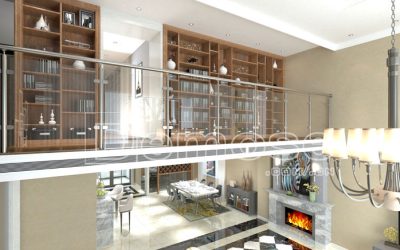
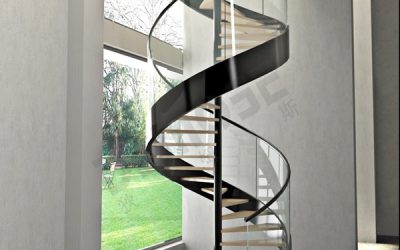
For decades, the primary function of a railing in commercial architecture was unequivocal: to provide safety. Building codes mandated their presence on stairwells, balconies, and elevated walkways, and the design conversation often ended at compliance and basic durability. Today, however, a significant shift is occurring. Architects, interior designers, and property developers are reimagining the railing not as a mere safety obligation, but as a pivotal element of commercial interior and exterior design. The modern railing is evolving into a multi-functional platform—a seamless integration of form, function, and technology that enhances user experience, supports branding, and optimizes valuable space.
This evolution marks the transition from passive barrier to active architectural component. We are entering the era of the commercially integrated railing.
The Driving Forces Behind Multi-Functionality
Several key trends in commercial design are fueling the demand for more sophisticated railing solutions:
- Space Optimization: In high-value commercial real estate, every square meter counts. Designers are under constant pressure to maximize utility. Railings, which occupy perimeter spaces and define traffic flow, present a significant opportunity for functional integration, eliminating the need for additional freestanding fixtures.
- The Experience Economy: Whether in a hotel, retail store, or office building, creating a memorable and positive user experience is paramount. The tactile and visual quality of architectural elements, including railings, directly contributes to the overall perception of a space. A well-designed, multi-functional railing can surprise, delight, and serve the user in unexpected ways.
- Technology Integration: The proliferation of IoT (Internet of Things) and smart building systems demands a physical infrastructure that can accommodate them. Railings offer an ideal, continuous pathway for concealing and supporting technology cabling and devices.
- Brand Identity and Wayfinding: Commercial spaces use design to communicate their brand. Railings present a continuous linear canvas for incorporating brand colors, materials, and even integrated signage, subtly reinforcing identity and guiding occupants.
Key Avenues of Functional Integration
The multi-functionality of modern railings manifests in several innovative ways:
1. Integrated Lighting
One of the most impactful and common integrations is lighting. By embedding LED strips within the handrail, base rail, or even the balusters, railings transform from passive elements into active sources of illumination.
- Ambiance and Safety: Handrail lighting provides soft, indirect illumination that enhances ambiance while critically improving safety on staircases and in low-light areas like cinemas or theaters. It acts as a continuous guide path, eliminating dark spots.
- Architectural Emphasis:Linear lighting can highlight the railing’s design and, by extension, the architectural lines of the space itself, creating a dramatic visual effect.
2. Technology and Connectivity
In today’s connected world, railings are becoming hubs for technology.
- Power and Data Integration: Custom-designed railings can incorporate discreet USB-A and USB-C charging ports, as well as standard power outlets. This is invaluable in settings like airport gate areas, co-working spaces, and university common areas, where users need to charge devices without searching for a wall socket.
- Interactive Displays: In retail or exhibition settings, railings can be fitted with small, mounted touchscreens for interactive catalogs or information points, or with holders for tablets and digital signage.
3. Branding and Wayfinding
Railings offer a unique opportunity for continuous branding.
- Custom Materials and Finishes: Using unique materials like back-painted glass, custom-perforated metal with a company logo, or branded color powder-coating turns the railing into a massive brand element.
- Integrated Signage: The railing itself can be designed to incorporate directional arrows, floor numbers, or other wayfinding information, creating a clean, uncluttered environment free of excessive standalone signs.
4. Furniture and Spatial Definition
The line between railing and furniture is becoming increasingly blurred.
- Integrated Seating: In spaces like public plazas, restaurant terraces, or airport waiting areas, railings can be designed with wide, flat top rails that double as casual seating or perch spots, maximizing occupancy without adding bulky benches.
- Planter Boxes and Green Walls: For biophilic design—which seeks to connect occupants with nature—railings can be designed to incorporate slim-line planters or support structures for vertical gardens. This brings greenery into commercial atriums, hotel lobbies, and office spaces, improving air quality and well-being.
Case in Point: The Demose Approach to Integrated Solutions
At Demose, with over two decades of experience in custom railing fabrication, we have witnessed this shift towards integration firsthand. Our collaborative process begins by looking beyond the railing as an isolated product. We engage with architects and designers early in the project to understand the broader objectives of the space.
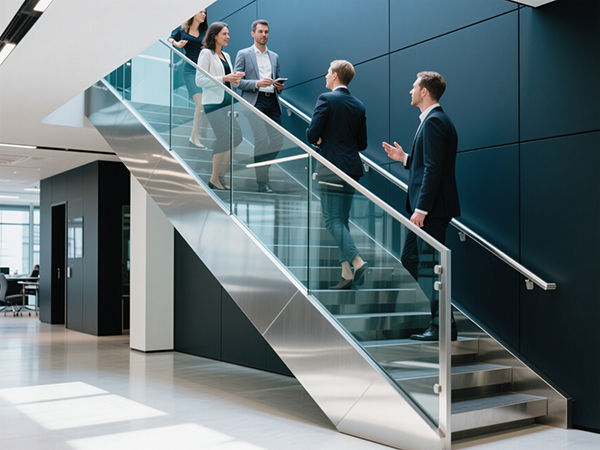
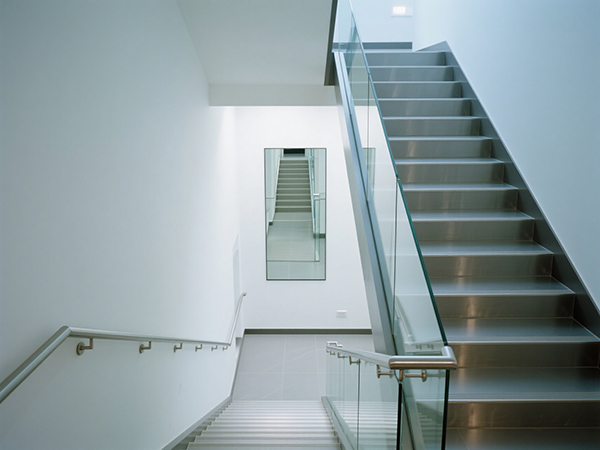
For instance, a recent project for a flagship tech company’s headquarters required a railing system for its central atrium staircase. The design needed to embody the company’s innovative spirit. Our solution was a minimalist glass balustrade with a sleek, custom-extruded aluminum handrail. Within this handrail, we seamlessly integrated continuous LED task lighting for safety and a discreet channel with pop-up power outlets at regular intervals. The result was a railing that was not only safe and aesthetically pleasing but also a highly functional tool for employees, perfectly aligned with the client’s brand and operational needs.
Our expertise lies in navigating the complexities of such integrations—ensuring that the incorporation of technology and lighting does not compromise the structural integrity or clean aesthetics of the railing, all while adhering to stringent international safety standards.
Challenges and Considerations
Designing multi-functional railings is not without its challenges. The primary consideration remains safety and code compliance. Any added function must not create pinch points, sharp edges, or compromise the railing’s load-bearing capacity. Electrical integrations must be performed to the highest safety standards, with proper insulation and access for maintenance.
Durability and maintenance are also critical. Commercial railings face high traffic and wear. Integrated elements like lighting diodes or charging ports must be selected for commercial-grade longevity and be easily serviceable without requiring a full railing replacement.
Finally, cost and lead time can be factors. Custom, multi-functional designs require more extensive engineering, prototyping, and fabrication compared to standard off-the-shelf systems. However, when viewed as a long-term investment that enhances the property’s value, functionality, and user experience, the ROI often justifies the initial outlay.
Conclusion: The Future is Integrated
The railing has shed its purely utilitarian skin to emerge as a central player in commercial interior design. By embracing multi-functionality, architects and designers can unlock new potentials for space utilization, user engagement, and brand expression. The integration of lighting, power, technology, and branding into railings represents a smarter, more holistic approach to architecture—one where every element works harder to contribute to the overall success of the commercial environment.
The question is no longer just what a railing is, but what a railing can do. As technology and design continue to advance, we can expect this trend to deepen, with future railings potentially incorporating sensors for building management, interactive displays, or even more advanced connectivity solutions. The journey of the railing from a simple guard to an intelligent, integrated platform is well underway, redefining the boundaries between safety, function, and aesthetic beauty.
About Demose:
Demose is a leading custom railing manufacturer with a specialization in engineering and fabricating high-quality, innovative railing solutions for commercial, architectural, and high-end residential projects. With a focus on precision craftsmanship, material expertise, and collaborative client partnerships, we bring complex design visions to life, ensuring each project meets the highest standards of safety, durability, and aesthetic excellence.
Recent Posts
-
 Loft Stairs: Design Ideas, Styles, and Material Guide
 -
 Indoor Steel Structure Stairs: The Fusion of Strength and Style
 -
 Framed Glass Railing: A Guide to Style, Safety, and Durability
 -
 Curved Glass Staircase: The Pinnacle of Modern Architectural Design
 -
 Finding the Right Custom Stair Companies for Your Project