When it comes to staircase design, few styles are as classic, efficient, and widely used as the straight stair. As the name suggests, this type of staircase runs in a single, direct line from one floor to the next without any turns or curves. Its straightforward design makes it a popular and practical choice for countless homes and commercial spaces.
If you’re considering a new staircase, understanding the pros, cons, and key considerations of straight-flight stairs is an excellent first step.
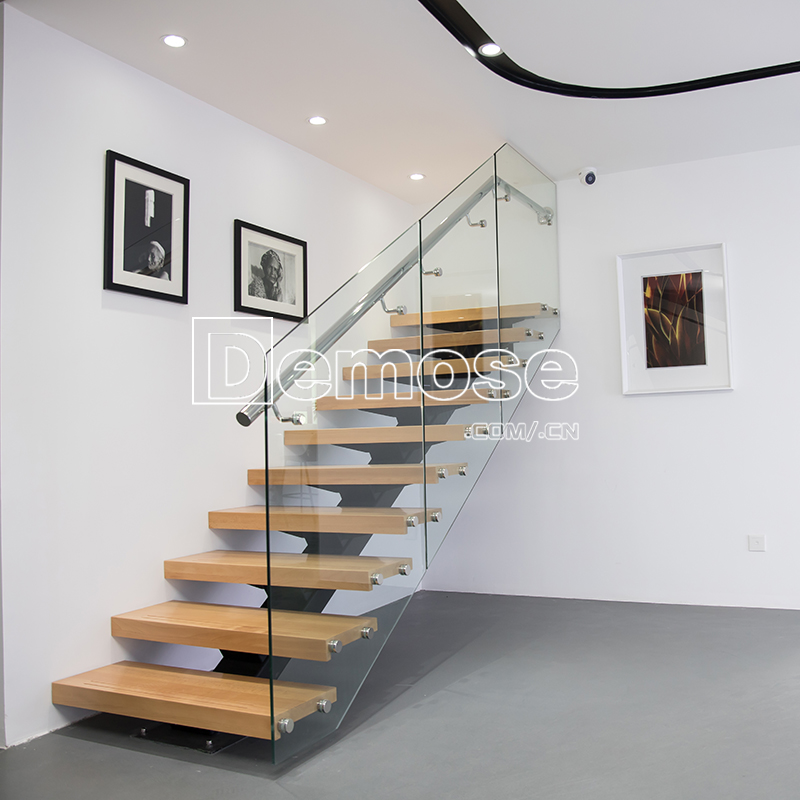
Key Characteristics of Straight Stairs
The defining feature of a straight stair is its linear, uninterrupted flight. This simple form offers several inherent advantages:
- Space Efficiency (in one direction): While they require a long, clear space, they are very efficient in their use of that area, providing the most direct route between floors.
- Ease of Construction and Cost-Effectiveness: The simple design typically makes straight stairs less complex to build and install compared to curved or winding staircases, often resulting in a more budget-friendly option.
- Safety and Accessibility: The continuous, unbroken flight makes it easier to navigate. This is beneficial for moving large items and can be safer for children and the elderly, as there are no tricky turns to navigate. Handrails can be installed in one continuous length.
- Clean Aesthetics: The straight lines offer a clean, modern, and minimalist look that can make a space feel more open and less cluttered. They work well with virtually any architectural style, from traditional to contemporary.
Things to Consider
While highly practical, the straight stair design does have a couple of considerations:
- Space Requirements: The main challenge is that they require a long, uninterrupted linear space. In tight floor plans, this might not be feasible.
- Visual Impact: A long, straight flight can create a strong visual line. While often a positive, the design is generally less of a focal point compared to a grand, curved staircase.
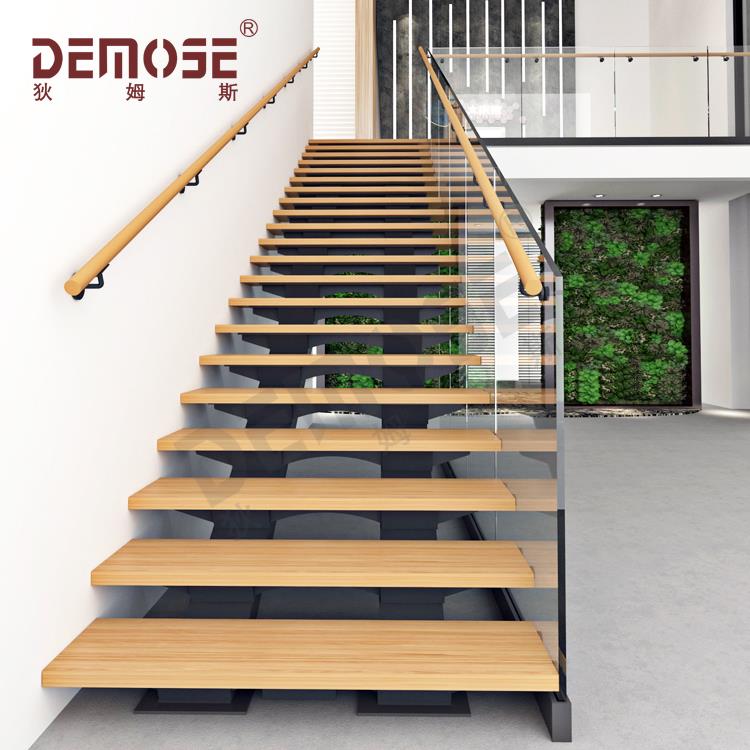
Design and Material Options
One of the strengths of straight stairs is their versatility. They can be customized to suit any taste:
- Open Rise (Floating Stairs): Removing the risers (the vertical boards between treads) creates a modern, “floating” effect that allows light to pass through, making the area feel more spacious.
- Closed Stringer: The most common type, where the treads and risers are enclosed within the stringers (the structural sides of the staircase), offering a solid, traditional look.
- Materials: Straight stairs can be built from a wide range of materials, including solid wood (oak, maple, walnut), glass, metal, or a combination, allowing for complete design flexibility.
Why Choose Demose for Your Straight Staircase?
At Demose, we have years of experience in designing and manufacturing high-quality custom staircases. We understand that a staircase is more than just a functional element; it’s an integral part of your home’s character.
Our process focuses on precision engineering and craftsmanship. We work with you to create a straight staircase that not only fits your space perfectly but also reflects your personal style. From the initial design consultation to the final installation, we are committed to quality, durability, and a seamless experience.
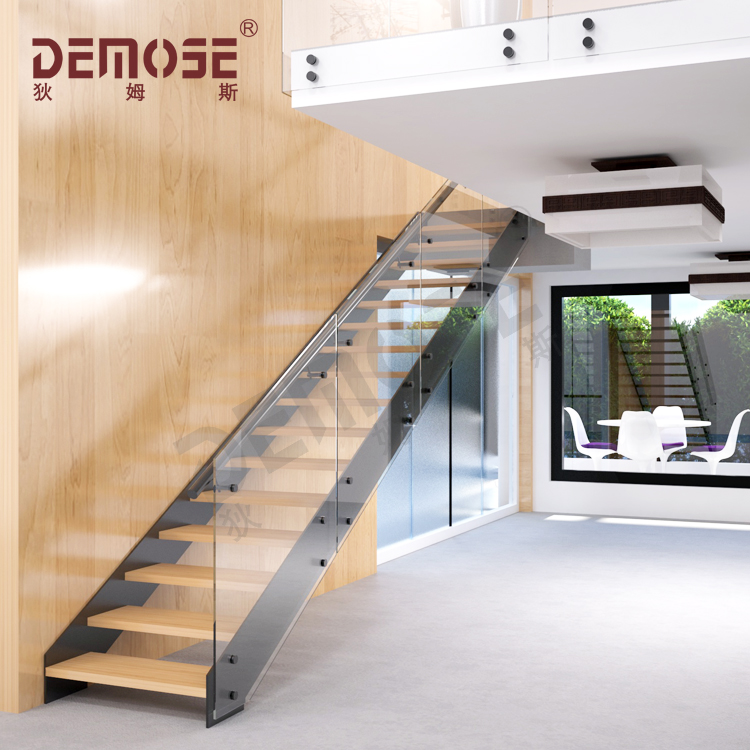
Conclusion
The straight staircase remains a top choice for a reason. It combines timeless simplicity, practical benefits, and a clean aesthetic that stands the test of time. If you are looking for a reliable, efficient, and customizable staircase solution, a straight-flight design is certainly worth considering.
Considering a new straight staircase for your project? Explore our portfolio or contact the Demose team to discuss how we can bring your vision to life with precision and quality craftsmanship.
Recent Posts
-
 Loft Stairs: Design Ideas, Styles, and Material Guide
 -
 Indoor Steel Structure Stairs: The Fusion of Strength and Style
 -
 Framed Glass Railing: A Guide to Style, Safety, and Durability
 -
 Curved Glass Staircase: The Pinnacle of Modern Architectural Design
 -
 Finding the Right Custom Stair Companies for Your Project


