Stainless steel railings are a premier choice for both residential and commercial properties, renowned for their strength, durability, corrosion resistance, and sleek, modern aesthetic. However, when requesting quotes, clients are often surprised by the wide range of prices. A simple balcony railing might seem straightforward, but the final cost is influenced by a intricate web of variables.
At Demose, as a professional custom railing manufacturer, we believe in transparency. Understanding these factors empowers you to make better decisions that align with your budget, design vision, and performance requirements. This comprehensive guide will dissect the primary elements that determine the price of your stainless steel railing project.
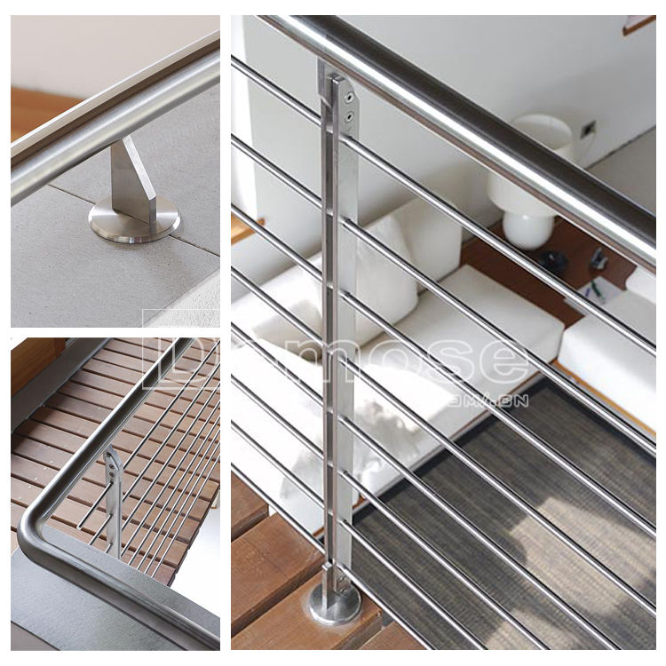
1. The Foundation: Raw Material Costs
The type and quantity of stainless steel used form the bedrock of the price. This isn’t just about the weight of the metal; it’s about its quality and composition.
Stainless Steel Grade: The most common grades are 304 and 316.
- Grade 304: This is the standard grade for most inland and residential applications. It offers excellent corrosion resistance at a more economical price point.
- Grade 316 (Marine Grade): Contains molybdenum, which significantly enhances its resistance to chlorides and salty environments. It is essential for coastal properties, industrial settings, or areas where de-icing salts are used. 316 stainless steel is more expensive than 304.
Material Dimensions and Gauge (Thickness): Thicker, larger-diameter tubes and profiles cost more. A heavy-duty commercial handrail requiring a 2.5mm thick wall tube will be priced higher than a residential balustrade using 1.2mm thick components. Thicker materials provide greater structural integrity and a more substantial feel.
Market Price Volatility: Stainless steel is a commodity, and its price fluctuates based on global supply and demand, energy costs, and trade policies. The quote you receive is valid for a specific period based on these market conditions.
Table 1: Impact of Stainless Steel Grade and Specifications on Price
| Factor | Standard Option (Lower Cost) | Premium Option (Higher Cost) | Why the Price Difference? |
|---|---|---|---|
| Steel Grade | Grade 304 | Grade 316 (Marine Grade) | 316 contains molybdenum, a more expensive alloy, for superior corrosion resistance. |
| Tube Wall Thickness | 1.2mm – 1.5mm | 2.0mm – 3.0mm+ | More raw material is used. Increased strength and durability for high-traffic areas. |
| Handrail Diameter | 38mm (1.5 inches) | 50mm (2 inches) or larger | Larger diameters require more material and may need specialized bending equipment. |
| Surface Finish | Mill Finish (Basic) | Brushed (Satin), Mirror Polish, or Colored (PVD) | Additional labor-intensive processes like grinding, polishing, or PVD coating add cost. |
2. Design Complexity and Engineering
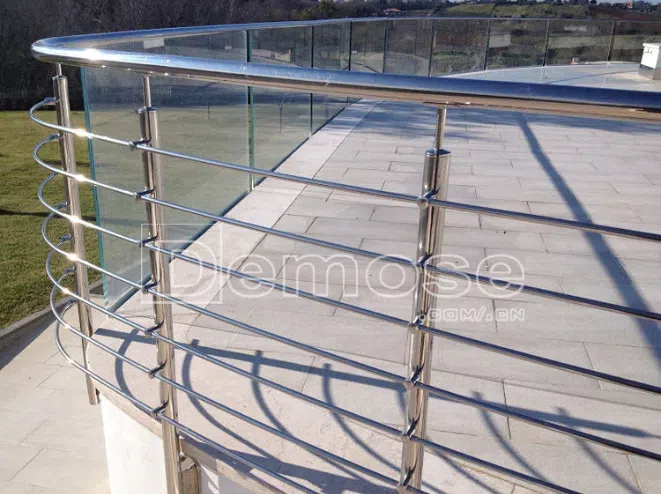
A simple, straight-line railing is far less expensive to fabricate than a complex, custom-designed system. Design complexity directly impacts labor, time, and material waste.
- Standard vs. Custom Design: Off-the-shelf, standard railing kits are the most budget-friendly. Custom fabrication, which is Demose’s specialty, involves creating unique solutions tailored to your architectural space. This includes curved handrails, intricate baluster patterns, custom brackets, and unique post caps.
- Curves and Angles: Fabricating a smooth, continuous curved handrail requires specialized CNC bending machines and a high level of craftsmanship. Each curve is a custom job, leading to higher costs compared to straight sections joined with standard elbows.
- Structural Engineering: For large-scale projects like grand staircases, multi-story atrium balconies, or commercial structures, a formal structural engineering analysis may be required. This ensures the railing system can withstand the mandated loads (e.g., 200 lbs. per linear foot). The cost of this engineering service is factored into the project.
3. Fabrication Techniques and Labor
The method of joining components significantly affects the railing’s appearance, strength, and cost.
Welded vs. Bolted Systems:
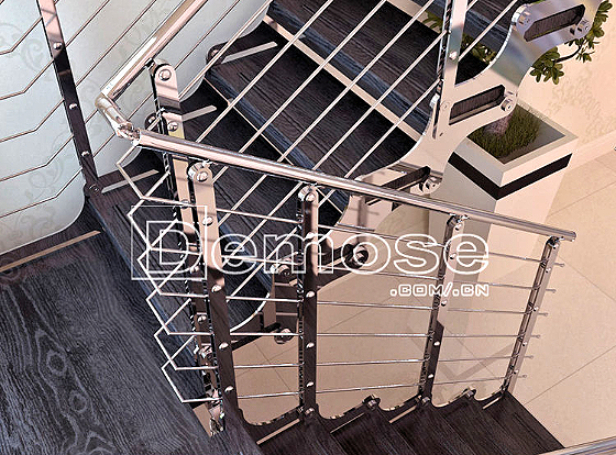
- Welded Systems: Components are welded together, ground smooth, and polished to create a seamless, “flowing” appearance. This is a labor-intensive process requiring skilled welders and finishers, making it a premium option.
- Bolted (Mechanical) Systems: Parts are connected using sleeves, brackets, and screws. While very strong when done correctly, they are generally faster to fabricate and install, resulting in a lower cost. The connections are visible, which can be a design feature or a drawback depending on the desired aesthetic.
Skill of the Workforce
High-quality fabrication is an art. At Demose, our experienced craftsmen ensure every weld is clean and every finish is flawless. This level of expertise is reflected in the price but guarantees a superior, long-lasting product.
4. Project Specifications and Site Conditions
The unique requirements of your project location play a massive role in the final quote.
- Residential vs. Commercial Use: Building codes for commercial railings are typically more stringent. They require higher load-bearing capacities, specific heights (usually 42 inches), and reduced spacing between balusters (to prevent a 4-inch sphere from passing through). These requirements demand more robust materials and construction, increasing the cost.
- Linear Footage and Height: This is straightforward: a longer railing or a taller guardrail will require more materials and labor.
- Site Accessibility and Installation Complexity: Is the site easily accessible? Or does it involve:
- Multiple Flights of Stairs?
- Uneven or Sloped Terrain? (e.g., hillside properties)
- Challenging Logistics? (e.g., high-rise balconies requiring scaffolding or crane lifts)Difficult sites increase installation time, require specialized equipment, and pose higher safety risks, all of which add to the cost.
Table 2: Project-Specific Factors Influencing Cost
| Factor | Lower Complexity/Cost Scenario | Higher Complexity/Cost Scenario | Impact on Price |
|---|---|---|---|
| Application | Residential Deck | Commercial Staircase or Public Space | Stricter building codes, heavier-duty materials, and higher liability insurance. |
| Site Accessibility | Ground-level, open area | Multi-story building requiring swing stages or confined space entry. | Increased labor time, need for specialized equipment and safety protocols. |
| Geometry | Straight runs on level ground | Complex layouts with curves, stairs, and multiple angles. | More complex fabrication, higher material waste, longer installation time. |
| Finish & Detailing | Standard brushed finish, no post caps. | Custom mirror polish, decorative post caps, integrated lighting. | Additional materials and significant additional labor for polishing and electrical work. |
5. Additional Components and Finishing Touches
The base railing is just the start. Integrated features and final finishes can customize the look and function but also affect the budget.
- Infill Materials: While stainless steel balusters are common, other infill options are popular:
- Tempered Glass Panels: Provide an unobstructed view and a very modern look. The cost includes the glass itself, specialized clamps or channels to hold it, and precise fabrication.
- Cable Infill (Wire Rope): Creates a minimalist, contemporary appearance. Requires high-tension hardware and precise installation.
- Advanced Finishes:
- Standard Brushed (Satin): The most common and cost-effective finish.
- Mirror Polish: A highly reflective, luxury finish that requires extensive polishing.
- PVD Coating: A vacuum-deposition process that applies a durable, color-fast coating in shades like black, bronze, or gold. This is a premium, high-end option.
- Integrated Lighting: LED strips can be incorporated into the handrail or posts, enhancing safety and ambiance. This adds cost for the lighting components, electrical work, and expert installation.
Demose: Your Partner in Value-Driven Custom Railings
At Demose, we don’t just sell railings; we provide engineered solutions. We understand that price is critical, but it should not be the only factor. Our philosophy is to deliver value—a perfect balance of quality, safety, aesthetics, and cost-effectiveness.
When you partner with us, you benefit from:
- Direct Manufacturer Pricing: Eliminating middleman markups.
- Expert Consultation: We help you navigate these factors to make choices that suit your budget without compromising on critical aspects like safety.
- Precision Manufacturing: Using state-of-the-art technology to ensure consistency and quality.
- Rigorous Quality Control: Every component is inspected before shipment.
Conclusion: It’s a Symphony of Variables
The price of a stainless steel railing is not determined by a single factor but by the interplay of material selection, design complexity, fabrication methods, and project specifics. A cheap quote may signal compromises in material grade, fabrication quality, or a lack of understanding of building codes.
By understanding the factors outlined in this guide, you can have a more productive conversation with your railing manufacturer. When you request a quote from Demose, you can be confident that the price provided is a detailed and transparent reflection of the high-quality, custom-crafted railing system you will receive. Investing in a well-made stainless steel railing from a reputable manufacturer like Demose is an investment in the long-term safety, beauty, and value of your property.
Contact Demose today for a detailed, no-obligation consultation and quote tailored to your specific project needs.
Recent Posts
-
 Loft Stairs: Design Ideas, Styles, and Material Guide
 -
 Indoor Steel Structure Stairs: The Fusion of Strength and Style
 -
 Framed Glass Railing: A Guide to Style, Safety, and Durability
 -
 Curved Glass Staircase: The Pinnacle of Modern Architectural Design
 -
 Finding the Right Custom Stair Companies for Your Project
